A lot of DIYers face the same question when outfitting their toolbox: what’s the real difference between a drill and an impact driver, and do they actually need both? It’s easy to assume they’re interchangeable, both spin things, both come in cordless versions, and DeWalt makes respected versions of each. But they’re built for different jobs. A drill excels at boring holes and driving screws at controlled speeds, while an impact driver delivers rotational force in rapid bursts, making it a powerhouse for driving larger fasteners and breaking fastened bolts. Understanding when to reach for each tool will save time, frustration, and your wrist from unnecessary strain. This guide breaks down the differences and helps you decide which DeWalt tool, or whether both, belongs in your arsenal.
Table of Contents
ToggleKey Takeaways
- A DeWalt drill excels at boring holes and driving smaller fasteners with precision and variable speed control (0–3,000 RPM), while an impact driver delivers 1.5 to 3 times more torque through rapid pulses for heavy-duty fastening and loosening corroded bolts.
- Impact drivers minimize wrist strain and fastener damage through hammer-burst technology, making them ideal for structural work like framing and deck-building where hundreds of fasteners are driven repeatedly.
- DeWalt’s 20V MAX cordless drill and impact driver platform offers battery compatibility, allowing both tools to share the same batteries and significantly reducing overall toolkit costs.
- For most DIYers, owning both a drill and impact driver is the smartest investment—a combo kit on the 20V MAX platform costs $150–200 and provides complete coverage for hole-boring, precision fastening, and heavy-duty fastening tasks.
- Choose a compact DeWalt drill or impact driver for tight spaces and light work, or upgrade to 20V MAX XR or FLEXVOLT models for professional-grade performance on demanding structural projects.
- Invest in two 4.0 Ah batteries and a fast charger ($100–150) for all-day use, ensuring continuous operation without downtime—essential for professionals but optional for homeowners tackling one or two projects yearly.
Understanding The Key Differences Between Drills And Impact Drivers
A traditional drill applies steady, continuous rotational force. You squeeze the trigger, the chuck spins, and power is delivered smoothly to the bit or driver. An impact driver, by contrast, uses a hammer mechanism inside its head, it drives the bit forward in rapid pulses, adding torque in short bursts rather than one long push.
The practical upshot: impact drivers deliver roughly 1.5 to 3 times more torque than drills of similar size and weight. That extra force makes them exceptionally good at driving large fasteners (½-inch lag bolts, structural screws) and loosening stubborn or corroded bolts. A drill can technically do these jobs, but you’ll work harder and risk stripping the fastener or damaging the bit.
Drill speed and control also differ. Most cordless drills offer variable speed (0–3,000 RPM or so), letting you slow down for precision work like driving small screws in tight spaces or boring delicate holes. Impact drivers max out around 3,500 RPM, they’re one-speed tools designed for grunt work, not finesse. The impact action also minimizes the twisting force on your wrists and arms, which is why many pros prefer them for repetitive fastening on job sites.
When To Use A DeWalt Drill For Maximum Effectiveness
Reach for a drill when precision, control, and varied speeds matter. Drilling holes, whether for pilot holes before driving screws, or boring holes for dowels or shelf pegs, is the drill’s bread and butter. A drill’s steady spin lets you keep the bit perpendicular to the work, and variable speed lets you slow down when the bit is about to break through the back of the piece, reducing tearout.
Drills also shine for driving fasteners in tight, confined spaces where the smaller head (compared to some impact drivers) fits easier. Kitchen cabinet assembly, hanging drywall, or trim work often demands that kind of finesse. Smaller fasteners, #6 or #8 wood screws, drywall screws, don’t require an impact driver’s raw torque, and a drill’s gentler application is less likely to strip or snap them.
If you’re mixing materials, say, drilling into metal, wood, and plastic in the same project, a drill lets you adjust speed on the fly. Drilling metal benefits from slower, steadier speeds: softer materials tolerate faster speeds. An impact driver’s fixed RPM gives you less control over how aggressively the bit engages. Bottom line: a drill is your workhorse for hole-boring and lightweight fastening tasks.
When An Impact Driver Outperforms A Traditional Drill
Impact drivers live for heavy-duty fastening. If you’re driving ¼-inch or larger structural screws, lag bolts, or construction fasteners, an impact driver changes the game. The hammer bursts let you drive without the strain and risk that comes from muscling a drill through resistance. Your wrist stays happier, and the fastener is less likely to strip.
Loosening frozen or corroded fasteners is where impact drivers truly excel. Try backing out a rust-seized bolt with a drill, and you’ll quickly appreciate an impact driver’s reverse-rotation bursts. The rapid strikes gradually free the fastener without the continuous torque that can break smaller bolts or twist your arms around.
Framing, deck-building, and other structural work, anywhere you’re fastening thick lumber or hardware together, calls for an impact driver. Professional framers have ditched cordless drills for this reason: an impact driver fastens faster and tires out the operator less over an eight-hour day. Even for a weekend deck project, if you’re driving hundreds of fasteners, the efficiency and reduced fatigue matter. That said, a single-speed impact driver doesn’t work well for delicate screwing or hole-boring. Most DIYers pair them with a drill for a complete toolkit.
DeWalt’s Top Cordless Drill And Impact Driver Models
DeWalt’s 20V MAX line offers the best balance of performance and cost for homeowners. The DCD777C2 drill (compact, about $99–120) is a solid entry point, it’s lightweight, fits tight spaces, and has enough power for light framing and household projects. The DCD791D2 is similar but slightly more robust, with broader appeal for basic DIY work.
For impact drivers, the DCF885C2 (compact, around $99–130) delivers enough torque for fastening and light fastener removal. It’s smaller and lighter than full-size models, so it suits confined spaces. The DCF887D2 steps up with more power and a more comfortable grip for sustained use.
If your budget stretches, the 20V MAX XR line includes the DCD777C2 drill and DCF901D2 impact driver. These XR versions hold more charge and handle tougher jobs with less fatigue. For serious structural work, DeWalt’s 60V FLEXVOLT system (the DCD777C2 equivalent is DCD776D2) delivers exceptional torque and run time, but at a higher price ($250+).
Choosing between models depends on your workload. Light household tasks: compact 20V models are enough. Regular framing or deck-building: step up to 20V MAX XR or consider FLEXVOLT if you’re doing this work repeatedly.
Battery Compatibility And Charging Considerations
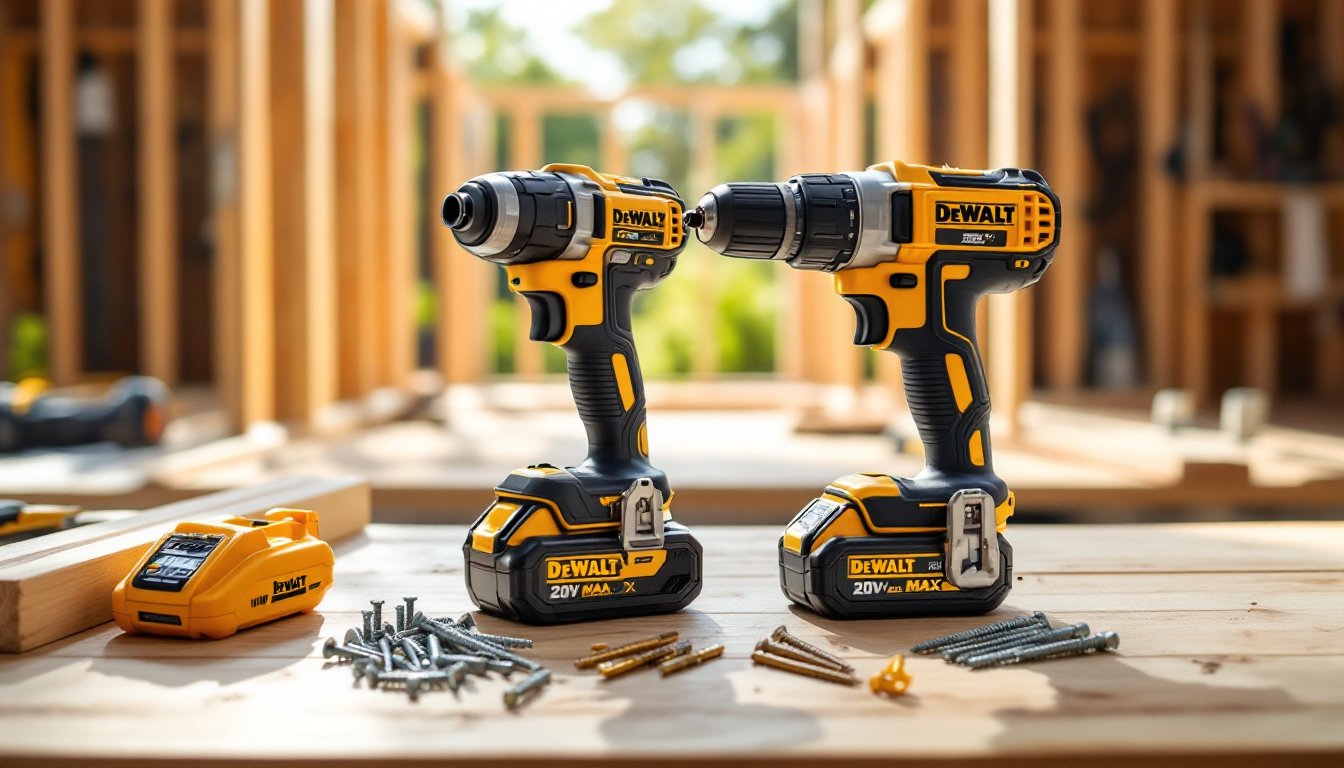
All DeWalt 20V MAX tools share the same battery platform, a major advantage. A DCD777C2 drill and DCF885C2 impact driver can swap batteries, so you only need to buy a couple of extra batteries and chargers, not a separate system for each tool. This flexibility cuts costs significantly over time.
Battery amp-hour (Ah) rating affects runtime. A 1.3 Ah battery gives roughly 20–30 minutes of moderate use: a 4.0 Ah battery doubles that. For light work, smaller batteries suffice. For professional or all-day use, buy at least two 4.0 Ah batteries and a dual charger so one charges while you use the other.
Charging times vary. Standard chargers take 30–60 minutes: fast chargers reduce that to 20–30 minutes. If you’re working on a bigger project, a fast charger is worth the extra $30–50. Cold weather slows charging: store batteries indoors during winter.
Selecting The Right Tool For Your DIY Or Professional Needs
Start by assessing your projects. Mostly holes and light fastening? A drill alone covers your needs. Regular framing, deck-building, or structural work? An impact driver is essential, and you’ll want a drill too. If budget is tight, prioritize the impact driver for fastening and buy a drill later, fastening is the bigger bottleneck.
Consider your workspace and comfort. Impact drivers’ compact models fit tight corners and studs in walls: full-size models offer better ergonomics for all-day use. If you have shoulder or wrist issues, an impact driver’s reduced twisting force is actually a health benefit, not just convenience.
For professional use, buy the better batteries and chargers upfront. Two 4.0 Ah batteries and a fast charger cost $100–150 and pay for themselves in time saved over a season. For homeowners tackling one or two projects yearly, smaller batteries and a standard charger keep costs down.
Don’t buy one expensive tool to replace two adequate ones. A 20V MAX drill and impact driver combo kit (usually $150–200) costs far less than a single premium tool and gives you both capabilities. Pair it with an extra battery and charger, and you’ve got a functional home workshop for under $300. That’s smart spending for a DIYer.
Conclusion
DeWalt drills and impact drivers are built for different jobs. A drill excels at boring and precision fastening: an impact driver dominates heavy fastening and loosening frozen hardware. For most home DIYers, buying both is the smartest move, you’ll reach for each regularly and wonder how you ever worked without them. Start with a cordless drill-and-impact combo on the 20V MAX platform, add a spare battery, and you’re set for years of projects.